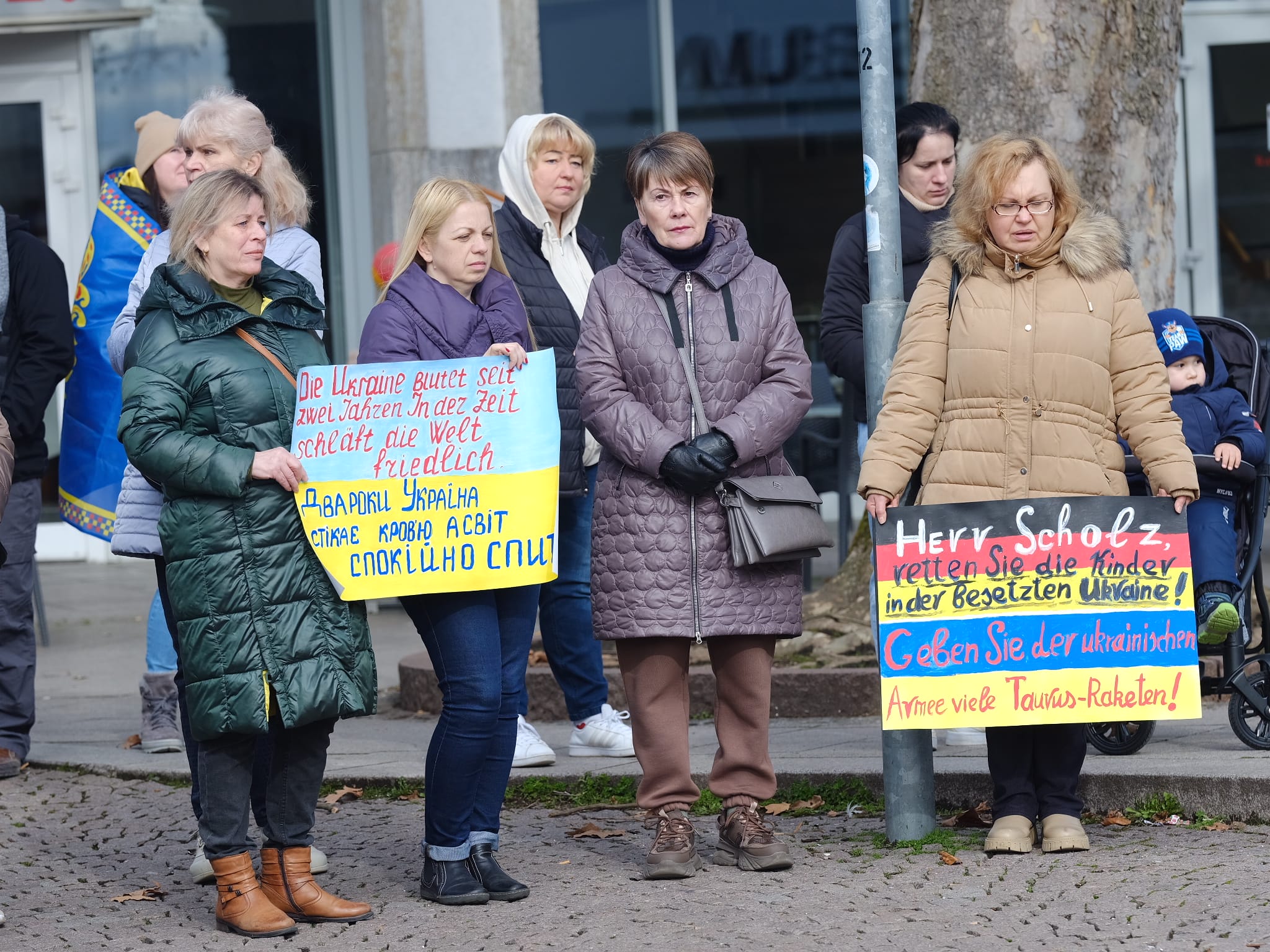
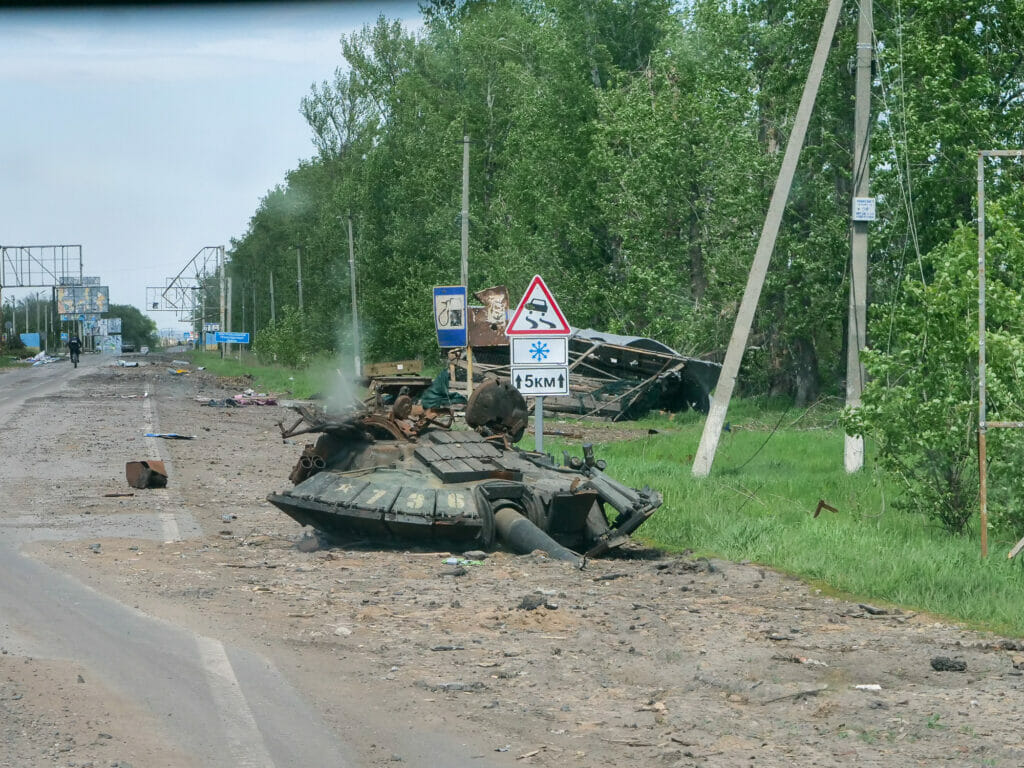
Two years. And the uncertainties remain. We, who call ourselves Ukraine's allies, watched the events from a safe distance like a football match: On our screens, we feared for Kyiv and mourned for Mariupol. We celebrated the recaptures of Kharkiv and Kherson, feared the sieges of Severodonetsk, Bakhmut and, most recently, Avdiivka. And all the hopes we had placed in the counter-offensive, especially on the southern front near Zaporizhia, were dashed by the Russian defensive lines.
Russia takes the initiative again
But what are the consequences of this if Ukraine is not to lose even more land and people after the next battles, probably around Kupjansk and Kramatorsk/Sloviansk?
We have to be honest with ourselves.
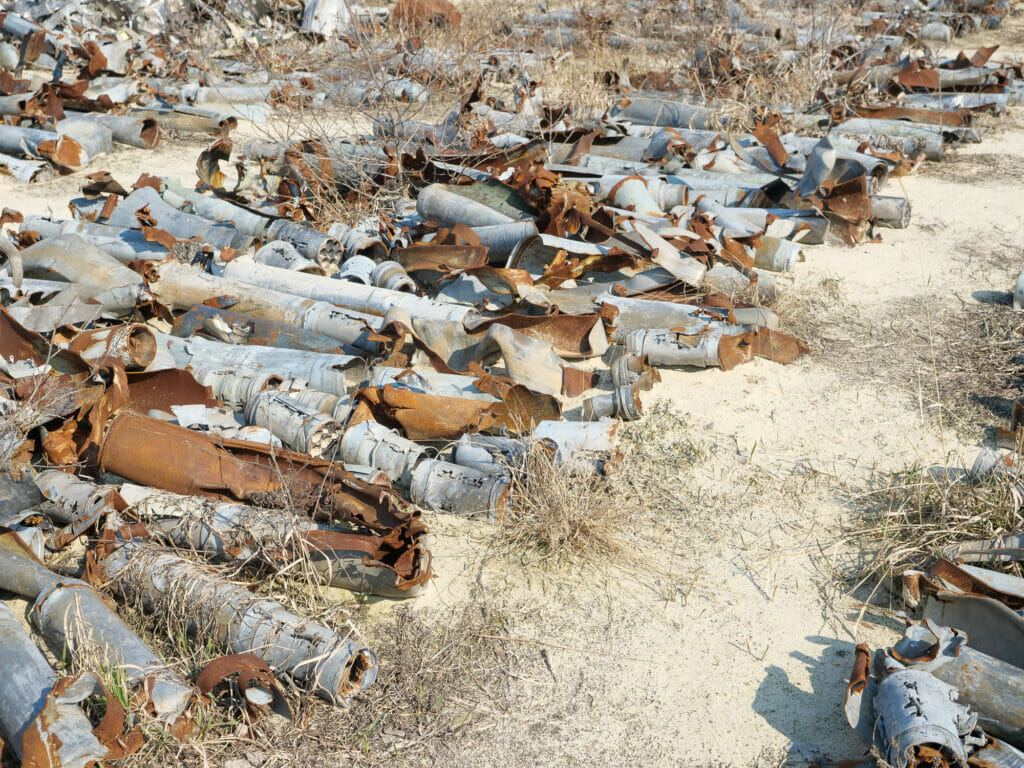
Neither the EU, NATO nor the USA wanted this war - and least of all Ukraine. Nevertheless, Putin sparked it after the invasion in 2014 had gone off without any serious international reaction. Despite all the expressions of solidarity, we are abandoning Ukrainian soldiers on the front line. The EU's promise to deliver one million rounds by March 2024? A resounding failure. Analysts estimate the ratio for artillery at 1:5 to 1:6. This means that Ukraine can defend itself against a barrage of 10,000 shells a day with a maximum of 2,000. Defend? Death in installments is more precise.
From the no-fly zone to the debates about the German equipment zoo - Marder, Leopard, Taurus - to the urgently needed supplies: the Ukrainian army reliably failed to get what it needed. The army does not even dare to dream of being on a par with the F-16 or F-35 in the air. Now the American blockade mood is being added to this, while at least the German government is intensifying its efforts to form an international alliance.
Meanwhile, the Kremlin is creating facts.
While politicians and societies debate, Russia is pumping a third of its national budget into its military. Putin relies on a war economy. He is investing more than 100 billion euros in the war this year alone. This would correspond to more than 20 percent of the German household volume.
* * *
If the question of how to end this war is really pressing, we need to think about new ways. The crux of the matter is not to force Ukraine to the negotiating table. Their allies have all the leverage they need to achieve thisThere is no evidence of any alleged pressure from either Great Britain or the USA to continue the war. The fact is that the initial talks in Istanbul were cancelled after
the genocide in Bucha. Russia has reportedly rejected all previous offers of concessions..
Creating the conditions for negotiations
Rather, a serious threat must be created against Russia that makes a negotiation appear more attractive than a solution on the battlefield. Admittedly: The following outline is unrealistic in view of the political moods and constellations. Nevertheless, I think it is worth at least discussing this in order to refocus:
- In the event of further Russian attacks on civilian objects and infrastructure in Ukraine, the allies will release all long-range weapons such as Taurus or ATACMS.
- An ultimatum for international intervention, for example with a deadline of December 31, 2024: Russia has until then to work with Ukraine on ending the war. Otherwise, the allies will work towards a status quo ante February 24, 2022. This leaves a buffer that signals to Putin that the war should not be brought into Russia. At the same time, the approach offers the opportunity to build on the (failed) Minsk agreements with a subsequent ceasefire Russiaand its proxies in Luhansk and Donetsk have blocked implementation just as much as Ukraine. and to initiate a serious peace process.
- Admission of the territories controlled before February 24, 2022 into NATO or serious protection guarantees by the allies. The Budapest Memorandum has, as is well known, proven to be toothless.
Yes, that would ultimately mean actively entering the war. But what is the alternative? Analysts agree that the war could come to us in five to eight years. Do we really want to wait until Russia has upgraded itself to the point of seeking further expansion? Sooner or later we will have to deal with a real war scenario for the German Bundeswehr and the allied armies. Let's rather look for a decision for Ukraine while the Russian military is severely weakened and Germany can still rely on its allies to some extent.
How the Afghanistan debacle motivated Putin to invade Ukraine
Without being able to cite any evidence, I am convinced that Putin planned his invasion of Ukraine according to a similar scheme: The embarrassment of Europe and the USA in Afghanistan with the disastrous withdrawal from Kabul and the retreat from the international stage have fueled the megalomania in the Kremlin. He was also able to try out military tactics for years in Syria, supported by the dictator in power there. Let us remember Obama's famous red lines and the abandoned Kurdish YPG. This has also damaged the credibility of the USA and its allies. Putin certainly has evidence to support the thesis attributed to him that "the Anglo-Saxons" would also leave Ukraine hanging in the long term. . While Germany, Great Britain, France and the USA licked their wounds and presented themselves as "weak" in the Russian interpretation, Putin marched on.
Let's take the alternative scenario. Ukraine falls. That doesn't even have to mean that Russian tanks are advancing as far as Lviv. A collapse of the demoralized military, a capitulation of the government is enough. 6.5 million Ukrainians have already left the country and 14.6 million - 40 percent of the population - are currently dependent on humanitarian aid. The German government's estimate that around ten million people would leave the country therefore seems almost an understatement. The ordeal that the admission of even two million more Ukrainians would mean for our society (and the budget debates) needs no further explanation.
* * *
Elsewhere, the transatlantic partners are acting much more decisively. Ironically, it was only this week that Defense Minister Boris Pistorius sent the frigate "Hessen" off to the Red Sea to protect civilian shipping from attacks by the Houthi militia. This is almost exclusively a matter of economic interests; many ships could switch to the more time-consuming and expensive route around the Cape of Good Hope. In doing so, we risk an indirect confrontation with Iran, an ally of Russia. Why don't we protect the Ukrainians just as actively from missile attacks? Our security interests at the Dnipro are much more serious than behind the Suez Canal.
Review of a successful NATO mission
Let us recall a positive example from history: Operation Delibarate Force 1995 in Bosnia and Herzegovina. To put it bluntly, NATO ended the more than three-year siege of Sarajevo by bombing the Bosnian Serb troops from the hills - with a mandate from the United Nations. I am deliberately not mentioning Operation Allied Force 1999. Just as Belgrade should not have been bombed, the same should now happen to Moscow. Even if the operation led to a strategically positive result, it was contrary to international law and avoidable.. In view of the veto powers Russia and China, this is unrealistic for Ukraine. As their allies, such action in Bakhmut, Avdiivka or Kupyansk would nevertheless be in accordance with international law and, in my view, the most effective means of bringing about an end to the war. The "cool strategist" Putin is therefore unlikely to play the nuclear card (but may threaten to do so).
We are letting Ukraine down
Ten days before the large-scale attack began, I wrote a comment for the Ukrainian portal USI online in 2022. I had previously traveled the contact line from Kharkiv via Milove to Kherson and Odesa with a Ukrainian colleague and a German colleague. I said "We are letting Ukraine down" at the time, without being fully convinced that this war would escalate after the many reassuring conversations with Ukrainians. NATO is letting Ukrainians die for the promise that they might one day become members and enjoy the protection of the alliance, I wrote at the time. Unfortunately, this proved to be the case. With the addition that they are now dying for "our freedom" or the "European post-war order".
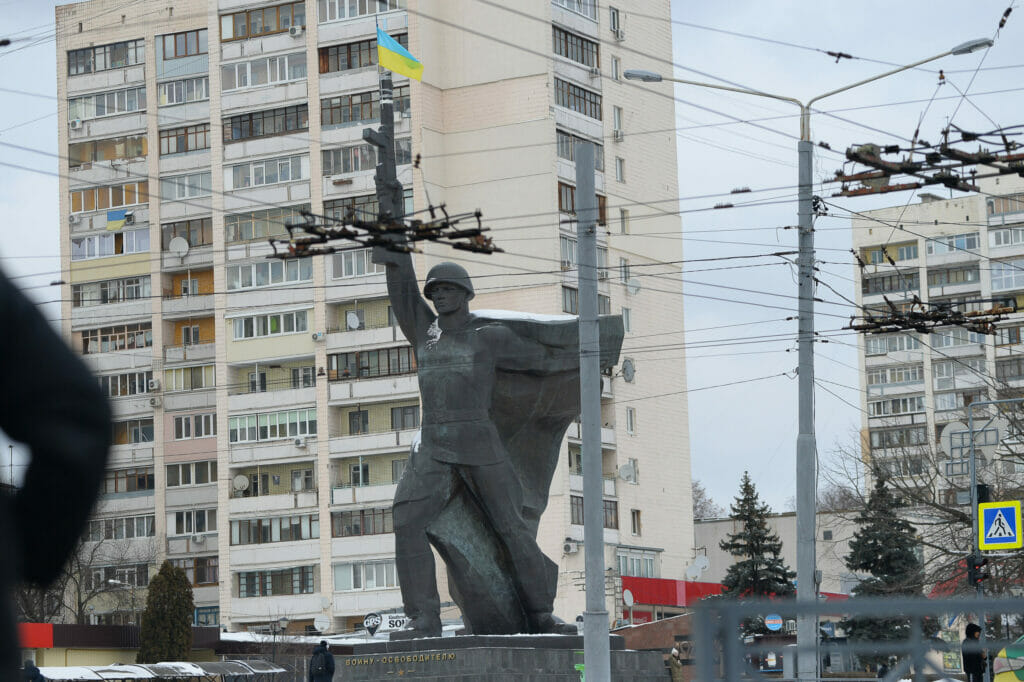
We need more than just a turnaround. We need a stable, just peace. Even if it has its price. In the best-case scenario, the threat of intervention is enough to stop the fighting. Only if our politicians force Putin to end the war, Ukraine's survival will be secured and our security guaranteed in the future. Russia will also benefit from this in the long term.
Teaser photo: Lena Reiner