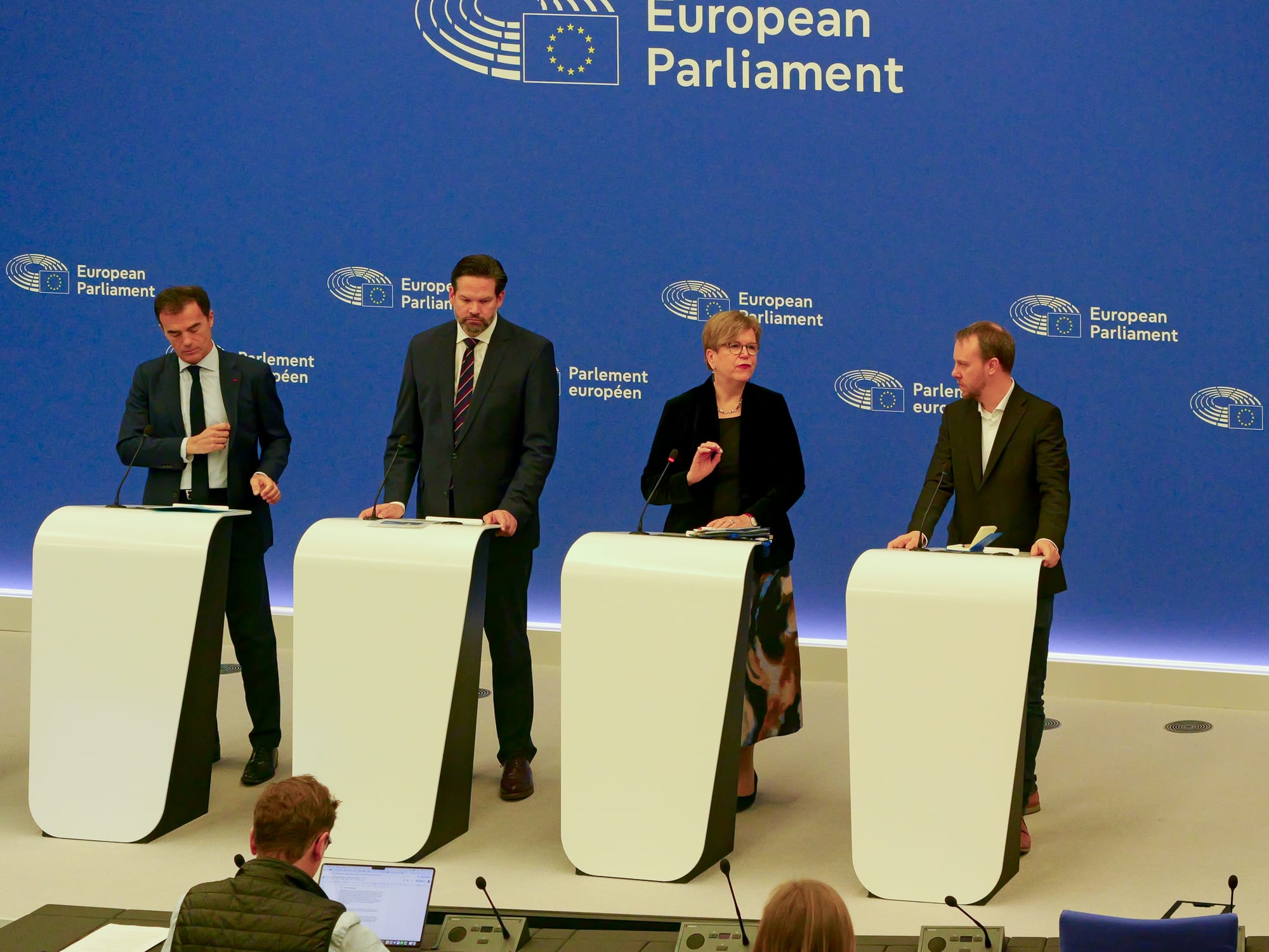
Rethinking the European Union. A group of Members of Parliament (MEP) is venturing to campaign for a reform of the fundamental treaty. With "Project 27", the members of the Spinelli Group 1 want to initiate a significant change process over the next two years. At the end of January, they spoke about their vision in the EU Parliament in Strasbourg.
Competencies for Brussels and Strasbourg
The aim of the reform project is deeper European integration with more powers for the Union and fewer national solo efforts. "This is very ambitious," says Lukas Mandl, Chairman of the Spinelli Group and member of the EPP Group2 about the realization of the project in this short period of time. Especially for an apparatus that is known and discredited for its chronic sluggishness in decision-making processes. Mandl and his fellow campaigners want to achieve the treaty reform with a European convention, as provided for in the Treaty of the EU Member States. Issues such as security, the economy, workforce training and social systems could be given a common political basis in this way. Mandl names the slogan:
More peace on the inside, more strength on the outside.
The details of this reform plan will be revealed in the course of "Project 27". "This really is a starting point today," emphasizes Mandl. The Spinelli Group therefore refrains from making demands of others, but is much more committed to the idea: "We want to build bridges and convince others." To do this, the team needs the support of the individual member states as well as parliamentary majorities. The Spinelli Group has already outlined the direction it is thinking in:
- A redesign and weakening of the unanimity principle3 for faster and clearer decision-making
- A new European security infrastructure to complement NATO
- Strengthening the economy through more efficient regulation4, strategic investments, more education and training, a spirit of innovation and a stronger workforce in order to counter the "demographic winter"5.
- Continued support for Ukraine and other parts of Europe that are under direct military attack; EU actors should also be involved in the reconstruction plans for Ukraine
- Development of European democratic structures6
- Preparing for a further enlargement of the EU
One of the architects of this plan is Daniel Freund (Greens/EFA7). The crises of the past 15 years - from the financial and banking crisis to migration and the Russian attack on Ukraine - have shown the EU's need for reform. "The world around us is changing," summarizes the German MEP. Whether Russia, the USA or China: international relations would become more hostile for Europe. "We have to be united and strong and able to adapt," Freund praises. European problems therefore require closer cooperation between EU member states in order to find common solutions. Without a reform, the Union would be in danger of a progressive decline.
Financial negotiations as a door opener
Freund sees the upcoming negotiations on the EU's multiannual financial framework as a good opportunity to set the course for a different future. The medium-term plans are the best way to reach far-reaching compromises. At the same time, the project must be promoted to national governments and parliaments.
All those involved must develop a spirit that the ability to act is now required, says Spinelli board member Gabriele Bischoff (S&D8). "It is clear that we have lost time and were not well prepared for the times we now find ourselves in," says the Social Democrat. First, bridges would have to be built in order to jointly initiate the reform of the treaty. Even within the Spinelli Group, there is not yet agreement on all points, notes Mandl. However, the EU cannot afford any further hesitation, even if deeper integration becomes complicated. "But the world and the situation will become even more complicated if we don't act," she emphasizes.

- The Spinelli Group was founded in 2010 by MEPs from various political groups in the EU Parliament. They are committed to a federalist union. The group is named after the Italian Altiero Spinelli, who is considered a pioneer of European integration. The collapsed traffic light coalition in Germany was also committed to this goal and campaigned for the "further development of a federal European state" (page 104). ↩
- The"European People's Party" is one of the largest political groups in the EU Parliament and is mainly made up of Christian Democratic, conservative and sympathetic parties from the EU member states. ↩
- In the EU Council every party must agree on issues that the EU member states consider sensitive. These include, for example, the areas of taxation, social security or common security and foreign policy. As a result, each member state has a right of veto here. ↩
- This meansless deregulation and more, for example, the reduction of duplicate structures or simplified reporting processes ↩
- i.e. the declining birth rates in the EU over the past few years. ↩
- Currently, for example, only the members of the EU Parliament are directly elected. Unlike national parliaments, the Parliament has no legislative powers. ↩
- The group "The Greens" and "European Free Alliance" unites ecological, regionalist and autonomous parties from various EU Member States. ↩
- The group "Socialists & Democrats" is made up of social democratic, socialist and progressive parties. ↩