With violence and vigilance, the terrorist group Hamas attacked Israel on October 7. Apart from a massive rocket launch that counted thousands of units to Israeli territory, they brutally targeted civilians. More than 1200 people died, and around 200 were taken hostage. For many Ukrainians who escaped the Russian-initiated war in Ukraine to Israel, such an attack became kind of a tragic “déjà vu”; some 15,000 sought refuge and a life in safety there.
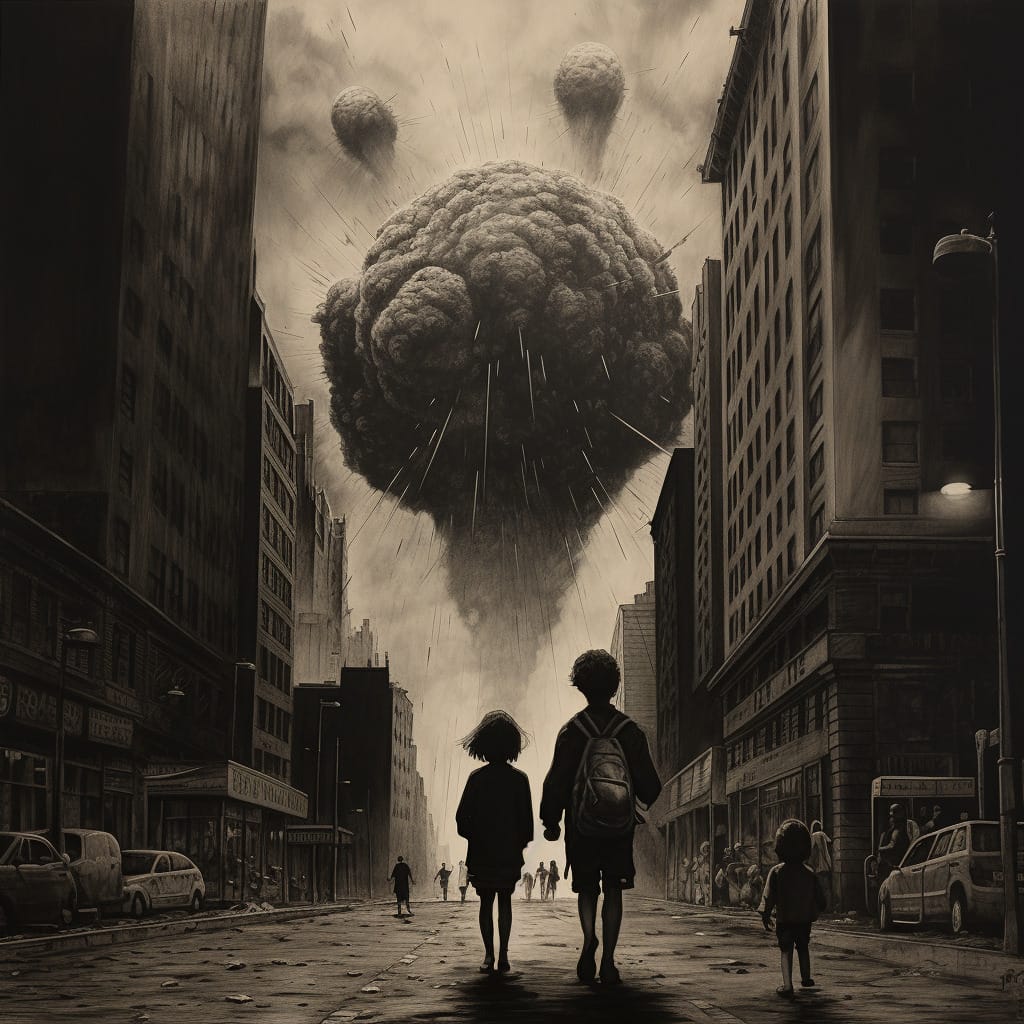
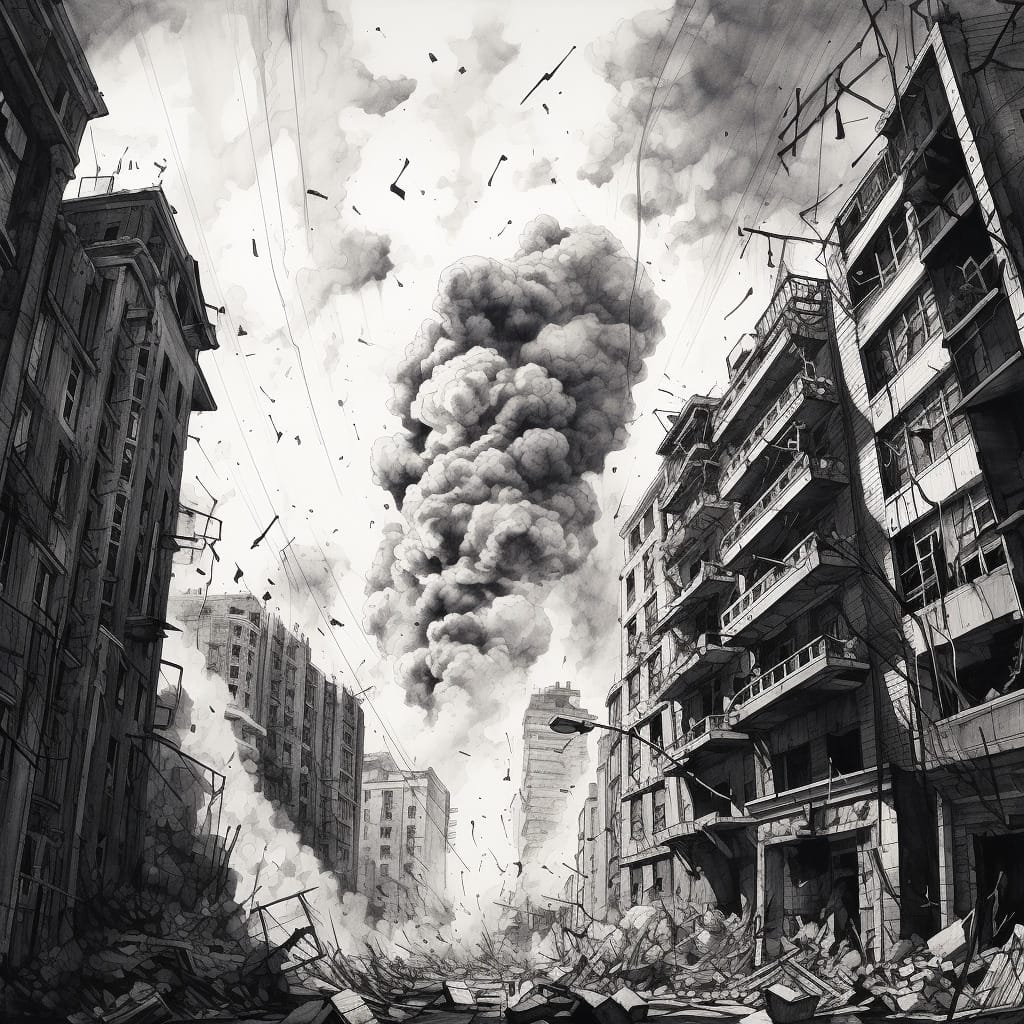
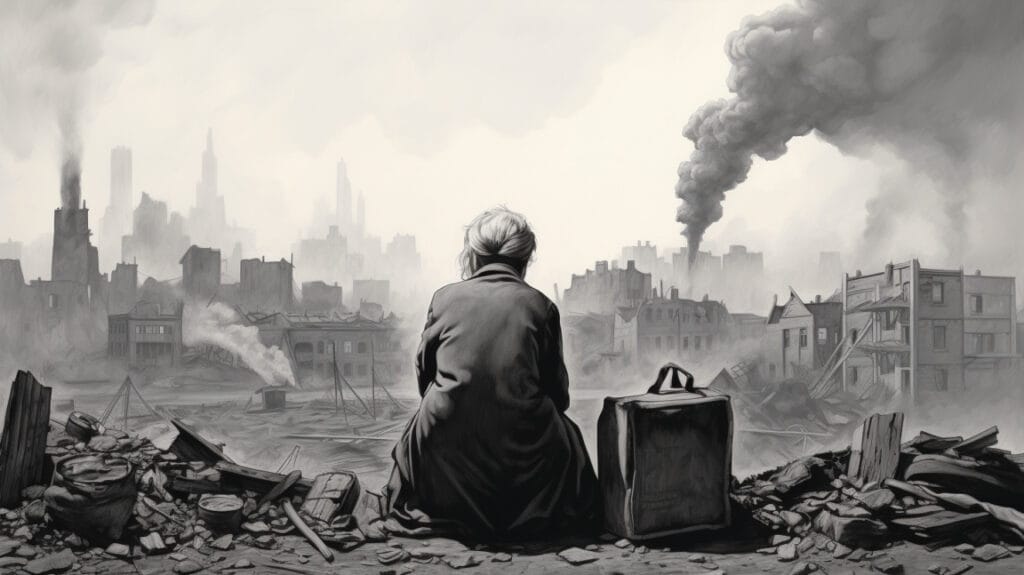
The images of this article were generated with AI.
Kateryna Tizenberg, a Ukrainian, flew to Israel to be united with her parents. After the recent attacks, she has a surreal feeling as to the similarity of experiences she witnessed: “I have woken up the same way as the first day of full-scale war in Ukraine, in the early morning.” She found out that even the habits due to the dangers were similar. “In Israel, it was from the app on my boyfriend's telephone that showed missile alerts all throughout Israel and the sound of sirens,” she explains. The same had happened one and a half years before, when her friend called her at 4.30 in the morning to tell her that the war had started. “Immediately after, I asked my father, who was in the eastern city of Zaporizhzhia, to pack things and go to the western regions of Ukraine, where people thought it was safer,” Tizenberg recalls.
The war in Ukraine, which started in 2014, turned nationwide on the 24th of February 2022, when the Russian army entered Ukraine through several sides and attacked the country with massive rocket strikes, followed by brutal killings of civilians in Bucha, Irpin, Mariupol and other cities.
One can argue about the similarities and differences of two wars, yet millions of people were scattered all over the world in search of safety. And Ukrainian officials argue that the current attack on Israel is in Russia's interests to reduce the help and support from the Western countries to Ukraine. In fact, international attention is shifting away from Ukraine during its ongoing offensive operations, which its partner criticized in the previous weeks for going on too slowly.
How Russia has been involved in the conflict – directly or indirectly through its connections to Iran, which supports Hamas and Hezbollah - is left to be investigated. However, on the people’s level, there are definite similarities between the wars. Thousands fly back to Israel to be mobilized, there are crowds near the mobilization centers. The nation unites in preparation to defend their country, strike the enemy back and voluntarily work. “It's very similar to how people start to organize themselves in order to help the army and those who were hurt in the war. A lot of my friends started to write the same way as Ukrainians ‘how are you?’ and then ‘I love you. Be safe’ after the response. That's what unites people: simple things, empathy for blameless victims, sharp feelings of injustice”, admits Kateryna.
Craziness and horror
For Lubov Lyagutskaya, 65-year-old Kyivan who traveled to Israel 18 times, both events were unimaginable. “We never felt that our generation would face the war,” she says, agreeing with what her president has said recently. “Only Putin will win from this situation – to distract attention from the war in Ukraine.” Having gone through wartime for around 20 months now, she knows what friends must feel now: “We went through craziness and horror. When the war started in Ukraine, we weren't prepared for this scale. I hope that the war in Israel will end soon”.
Familiar feelings come up
Svitlana Shvartz, 63-year-old resident of Mariupol, felt the injustice during the unprecedented attack on her city on March 2: Missiles hit her city. “Every 15 minutes, there were explosions. For the next two weeks we didn’t have gas or water,” she tells: “Everyone was lying down and hiding. There was horror, the connection was immediately interrupted, then the gas.” She remembers the lack of information and not knowing what’s happening, similar to how she felt after the Hamas attack. Now residing in Bafule, in Northern Israel, she is experiencing horror yet again. “We came to Israel because our eldest son has been living here,” she explains. When the attack started, old feelings came up: “We have heard sirens again, and I didn’t react calmly, as our neighbors did. To me, everything is still fresh and horrifying. The terrible memories of what we have encountered came to me six months later after escaping Mariupol.”
To Shvartz’ family, Israel became a new shelter, yet she feels insecure, and hopes for the rockets to disappear. Similar to Ukraine, also Israel’s existence is depending on peace.